
Audit Overview
Your store's untapped revenue potential — and how to unlock it
Why We Created This Audit
We analyzed https://ruohan.co/ the same way we've audited 350+ e-commerce stores — looking for the specific gaps between your current experience and what top-performing Fashion stores deliver. Every finding in this report is a revenue opportunity backed by industry data and competitive benchmarks.
What We Analyzed
- UX & Conversion Design12 findings
- Technology & App StackPlatform + 7 apps
- Industry BenchmarksFashion
Pages Analyzed
- Homepage3 findings
- Collection Pages2 findings
- Product Pages (PDP)5 findings
- Cart & Checkout2 findings
 This audit was prepared by Growisto — a CRO-led Website development team behind 167% conversion growth for Atomberg, 46% CR lift for TyresNmore, and 350+ e-commerce projects.
UX & Conversion Findings
Page-by-page analysis with visual comparisons against top Fashion stores
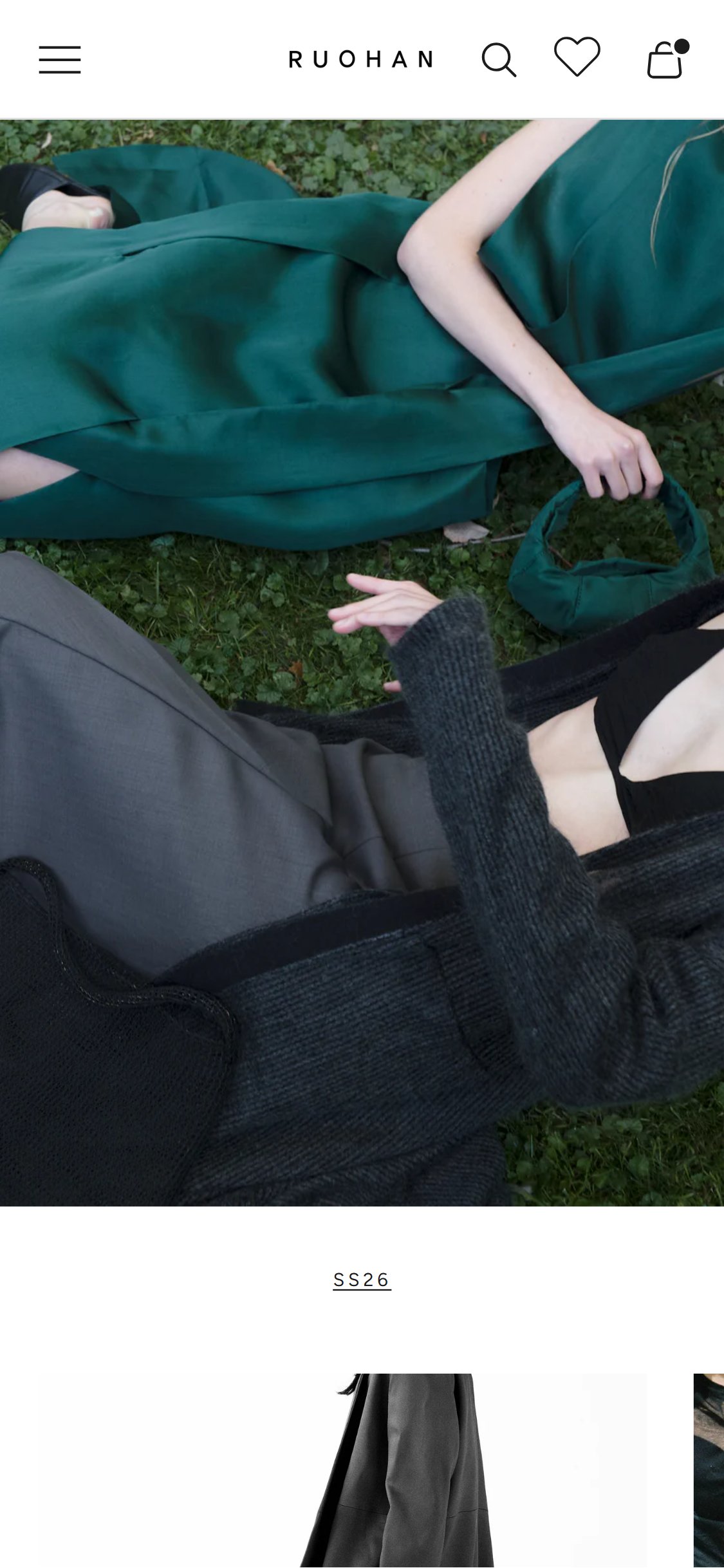
- First fold is a full-bleed campaign photo with no clickable CTA button — only the brand logo header is visible above the fold
- The hero image is linked but has no visible button text (Shop Now, Explore, View Collection) to communicate next action
- Scrolling reveals a 'VIEW ALL' text link below the fold but no actionable button in the hero viewport
- 8/10 benchmark fashion stores use a prominent hero CTA to direct first-time visitors to a collection
- Add a pill or outlined CTA button ('SHOP SS26' or 'EXPLORE COLLECTION') overlaid on the hero image at the bottom third, using a light/transparent style that preserves the editorial aesthetic
- Ensure the button links directly to the current season collection rather than a generic page
- Test button placement in the bottom-left corner — common luxury fashion pattern that maintains image-first feel

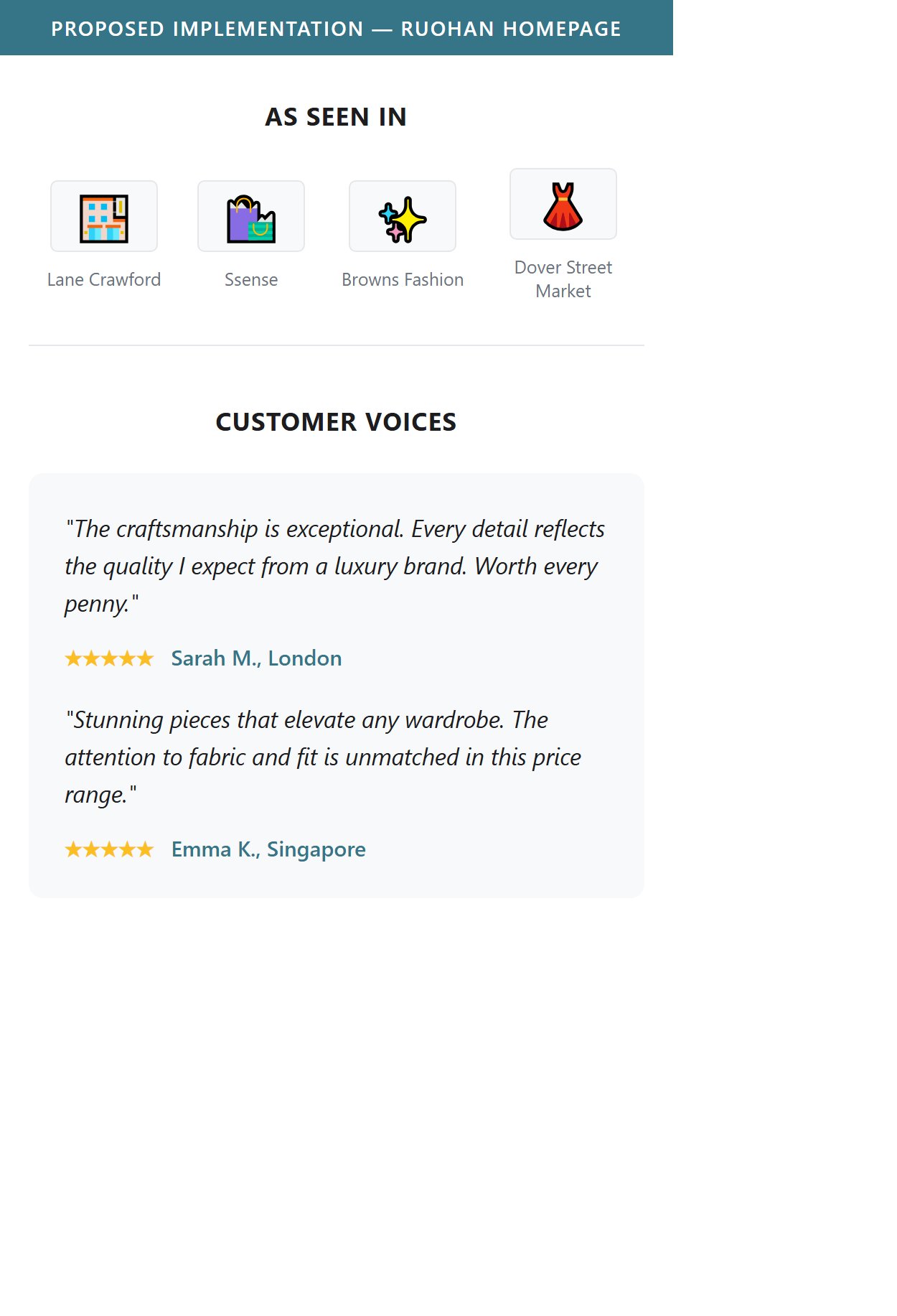
- The entire homepage contains zero social proof: no customer reviews, no press/media logos, no testimonials, no platform ratings
- Ruohan x LaneCrawford collaboration is mentioned in editorial copy but without structured credibility formatting (no logo, no quote, no badge)
- Global fashion buyers heavily rely on third-party validation — absence of press coverage or stockist credibility hurts conversion for new visitors
- 7/10 benchmark fashion stores feature some form of social proof section on the homepage
- Add an 'As Seen In' or 'Stocked At' strip with logos of key stockists (LaneCrawford, etc.) positioned below the hero to establish immediate brand credibility
- Add 3–4 short customer testimonials (name + location) — even a simple text carousel works within the brand's aesthetic
- If press coverage exists (editorials, magazine features), create a clean press logo section in the homepage mid-section
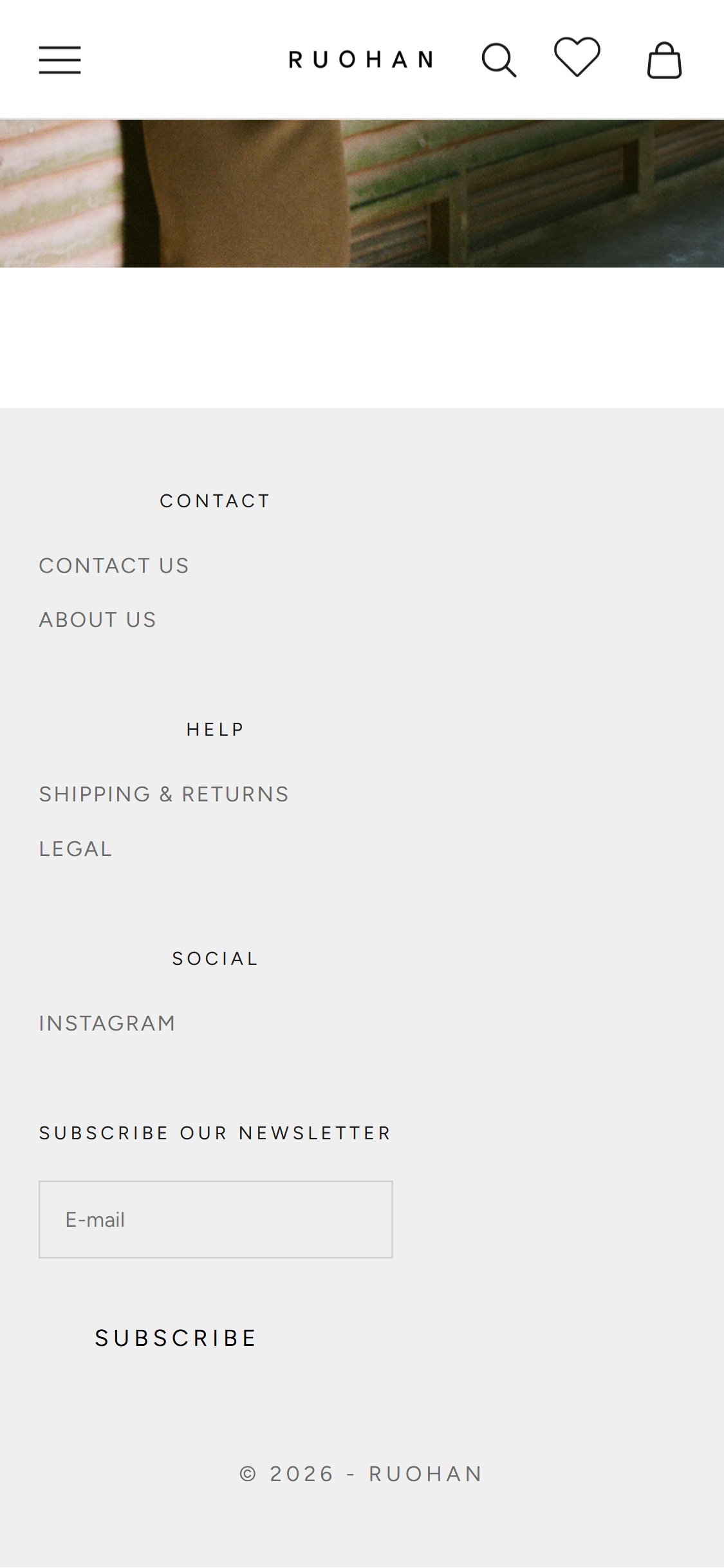
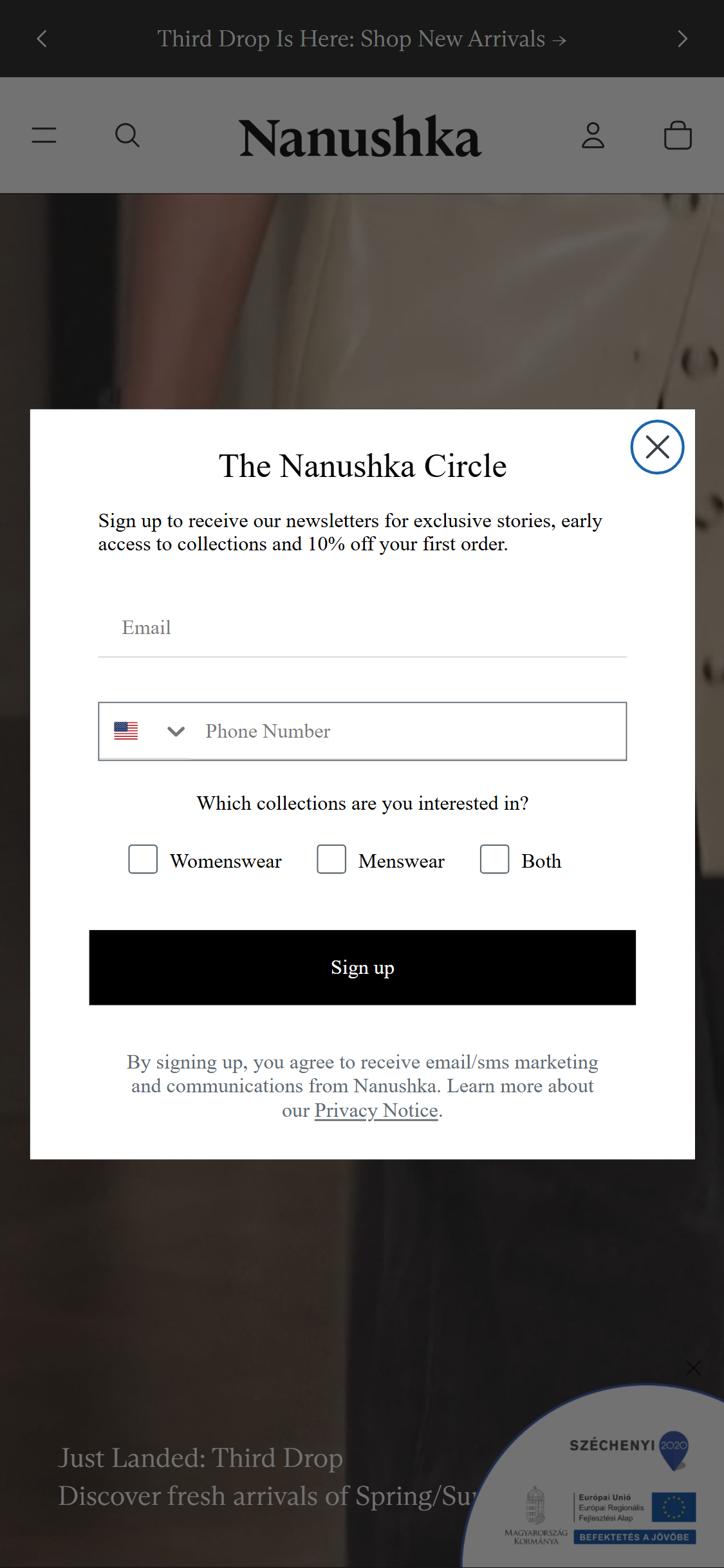
- Newsletter signup is buried in the footer with only 'SUBSCRIBE OUR NEWSLETTER' as the heading — no incentive or value proposition
- No popup or flyout email capture exists anywhere on the site — the only capture point is the footer form which most visitors never reach
- No discount, early access, or exclusive content offer to motivate signup
- Email list is the most cost-effective retention channel — missed capture here means expensive re-acquisition later
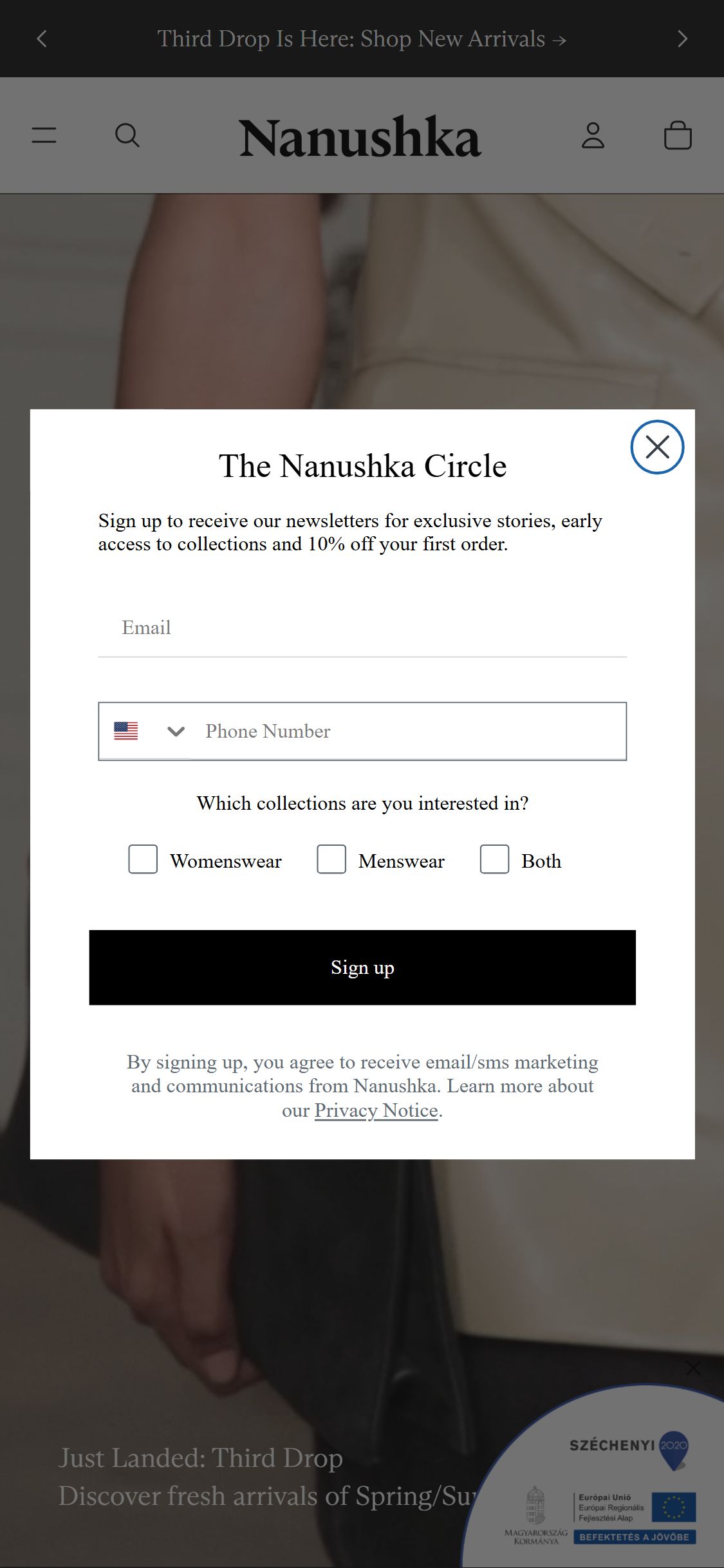
- Implement a timed popup (appears after 15–20 seconds or on exit intent) offering a first-order incentive — e.g. '10% off your first order' or 'Early access to new collections'
- For a luxury brand, 'Early access' or 'Behind the scenes content' are incentives that do not cheapen the brand positioning
- Update footer signup copy from 'Subscribe our newsletter' to a value-first headline like 'Be the first to know — new arrivals, exclusive stories'
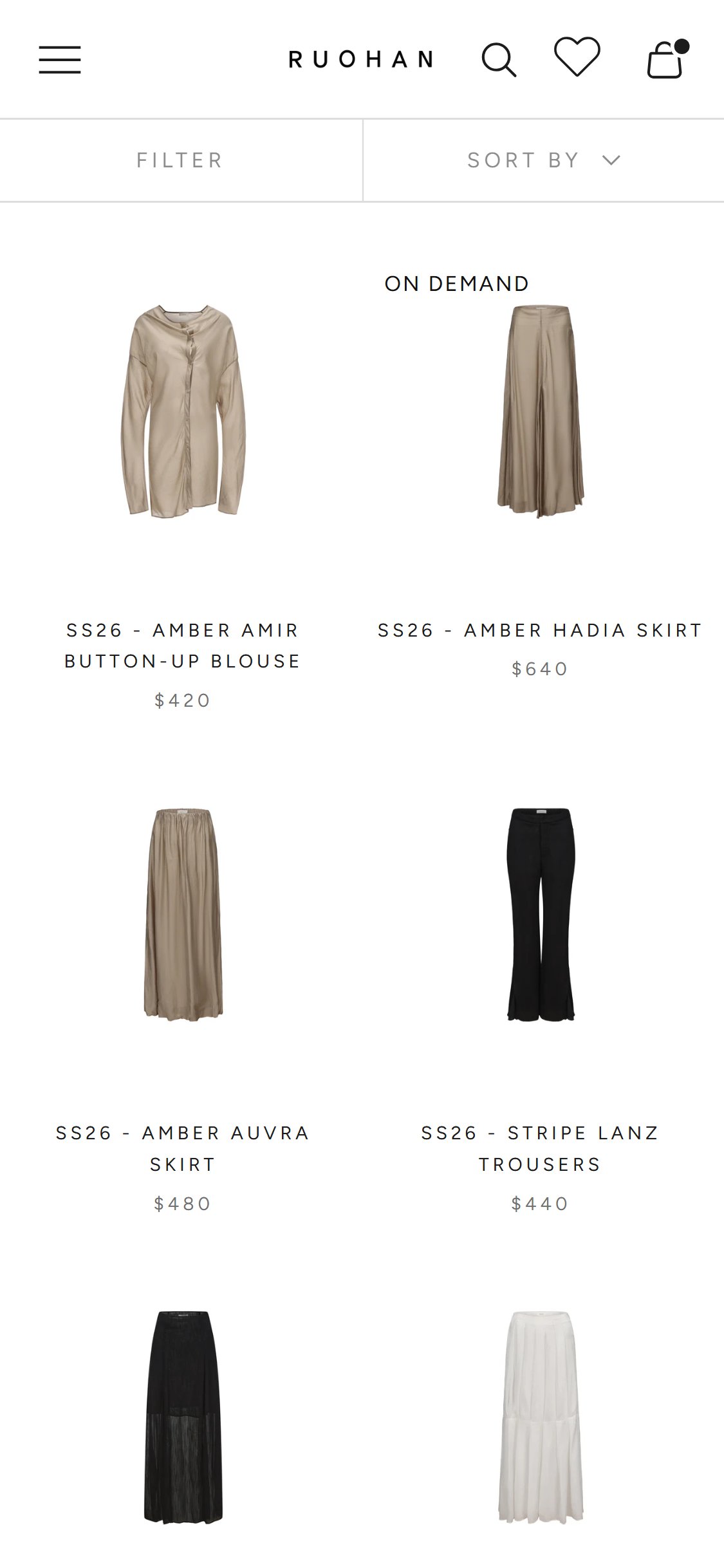
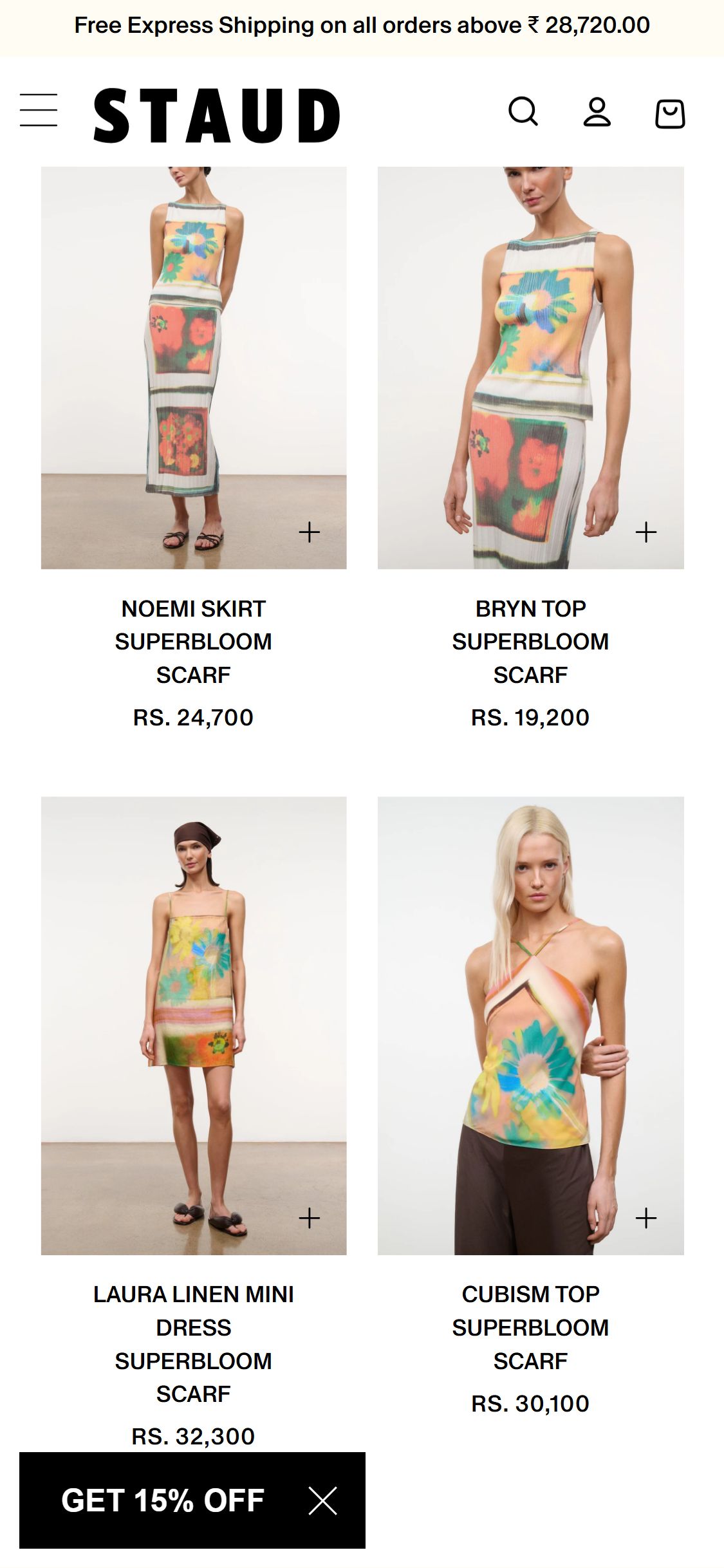
- Collection cards show only product image, title, and price — no color swatches indicating available colorways
- Products like the Auma Dress come in 3+ colors (Basalt, Limestone, Birch) but the collection card shows only one default color with no hint of alternatives
- Shoppers must click into each individual PDP to discover color availability, creating unnecessary friction and increasing bounce rate from collection pages
- 4/10 benchmark fashion stores show color swatches on cards; Staud implements image-based swatch thumbnails as a best-in-class example
- Add small color dot swatches (16–20px circles) below the product title on each collection card — tapping a swatch should update the card image to that color
- For products with 3+ colors, show up to 4 swatches with a '+X more' indicator for additional variants
- Implementing swatches on cards is estimated to increase collection-to-PDP click rate by 15–20% by helping shoppers pre-qualify their interest
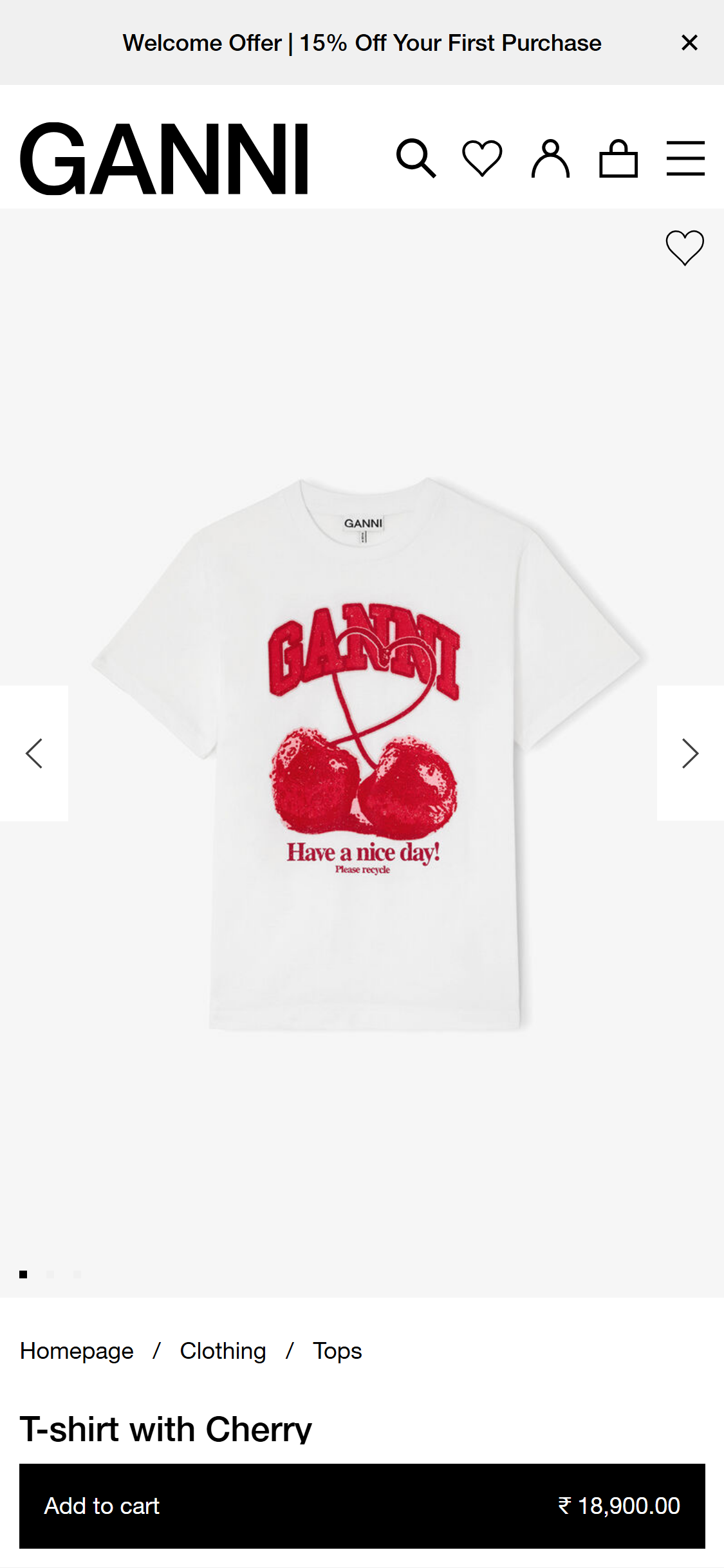
- No quick-add or quick-view mechanism exists on any product card — the only action is navigating to the full PDP
- For shoppers who already know their size and color preference, removing the PDP navigation step eliminates 2–3 page loads per purchase
- 8/10 benchmark fashion stores provide either quick-add or quick-view on collection cards
- Particularly impactful for returning customers who browse by season/collection and want to add multiple items efficiently
- Add a '+' icon or 'QUICK ADD' button that appears on card tap/hover, opening a minimal size selector overlay without navigating away from the collection
- For single-size products or accessories, the card tap could add directly to cart with a confirmation toast notification
- Alternatively, implement a quick-view drawer showing key PDP info (images, sizes, price) with an ATC action — keeps users in browse mode
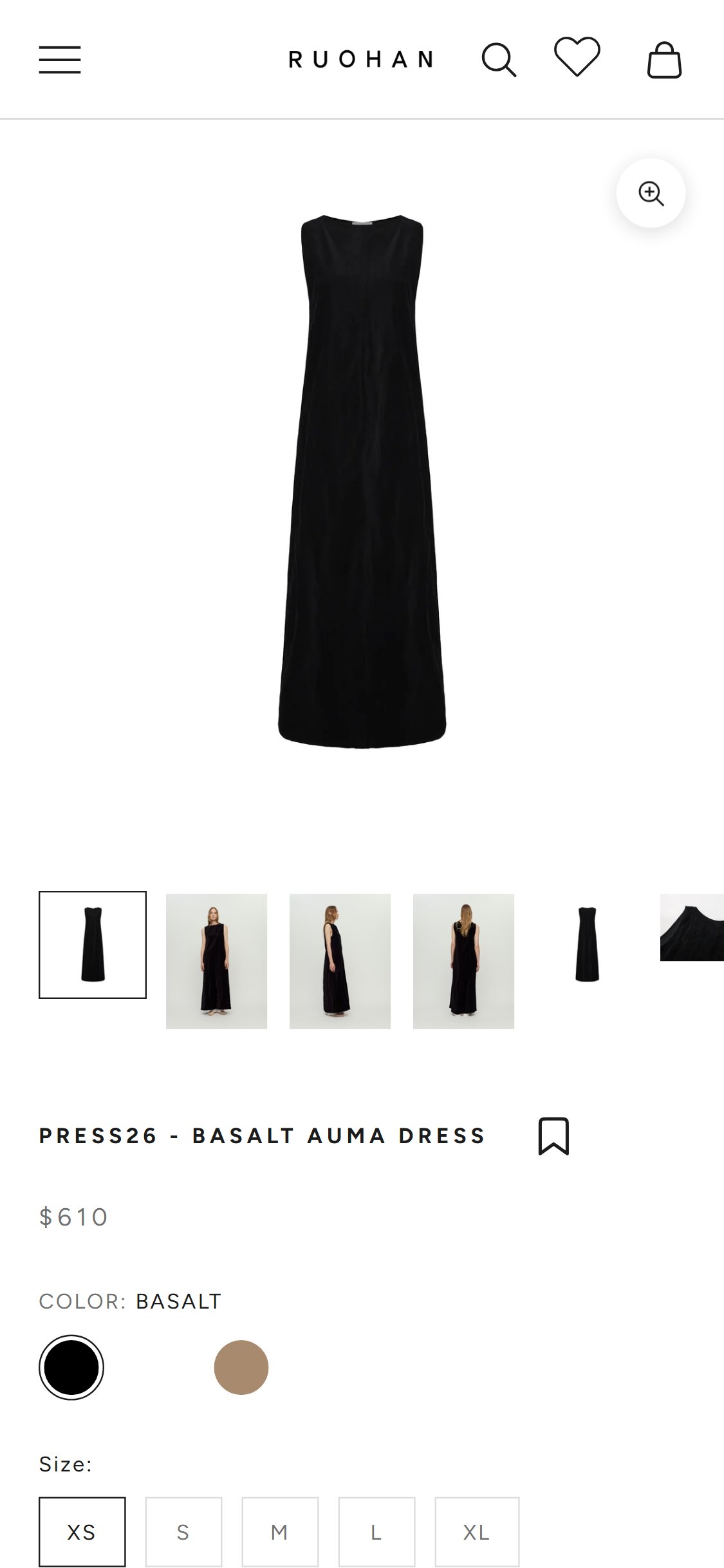
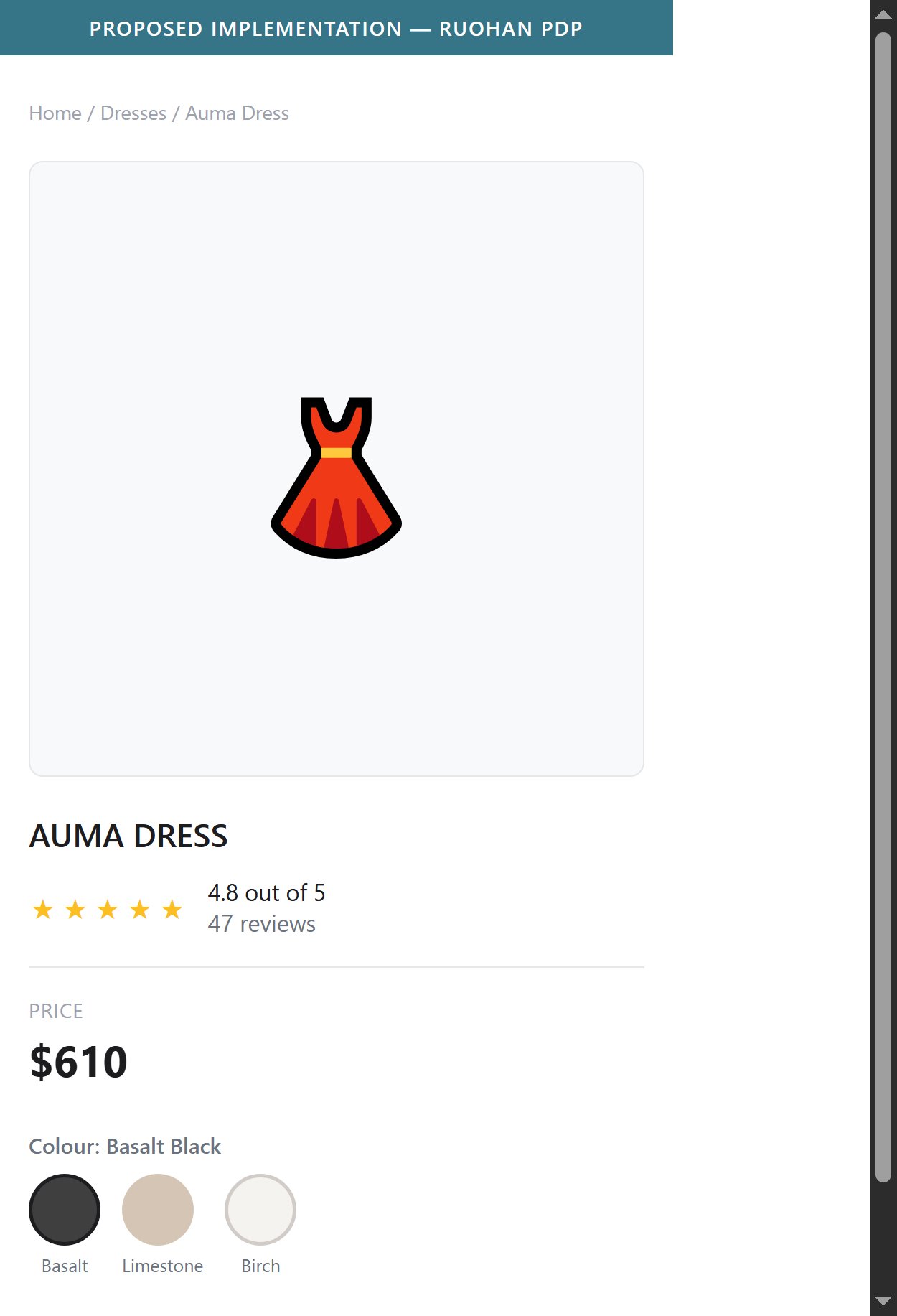
- PDP shows product title and price but has zero star ratings or review count above the fold — no review system is present anywhere on the PDP
- The entire PDP contains no reviews section: the page flows from product info → Complete the Look → Contact Form → Footer
- At $420–$880+ price points, the complete absence of social proof creates significant conversion friction for first-time buyers
- 7/10 benchmark fashion stores show star ratings above fold; missing reviews can suppress fashion CVR by 20–30%
- Install a reviews app (Judge.me, Okendo, or Yotpo) and display the aggregate star rating + review count directly below the product title, above the price
- Seed initial reviews by emailing past customers — even 10–15 reviews per product significantly improves conversion for new visitors
- For luxury positioning, prioritize quality reviews with detailed fit/styling context over raw review volume
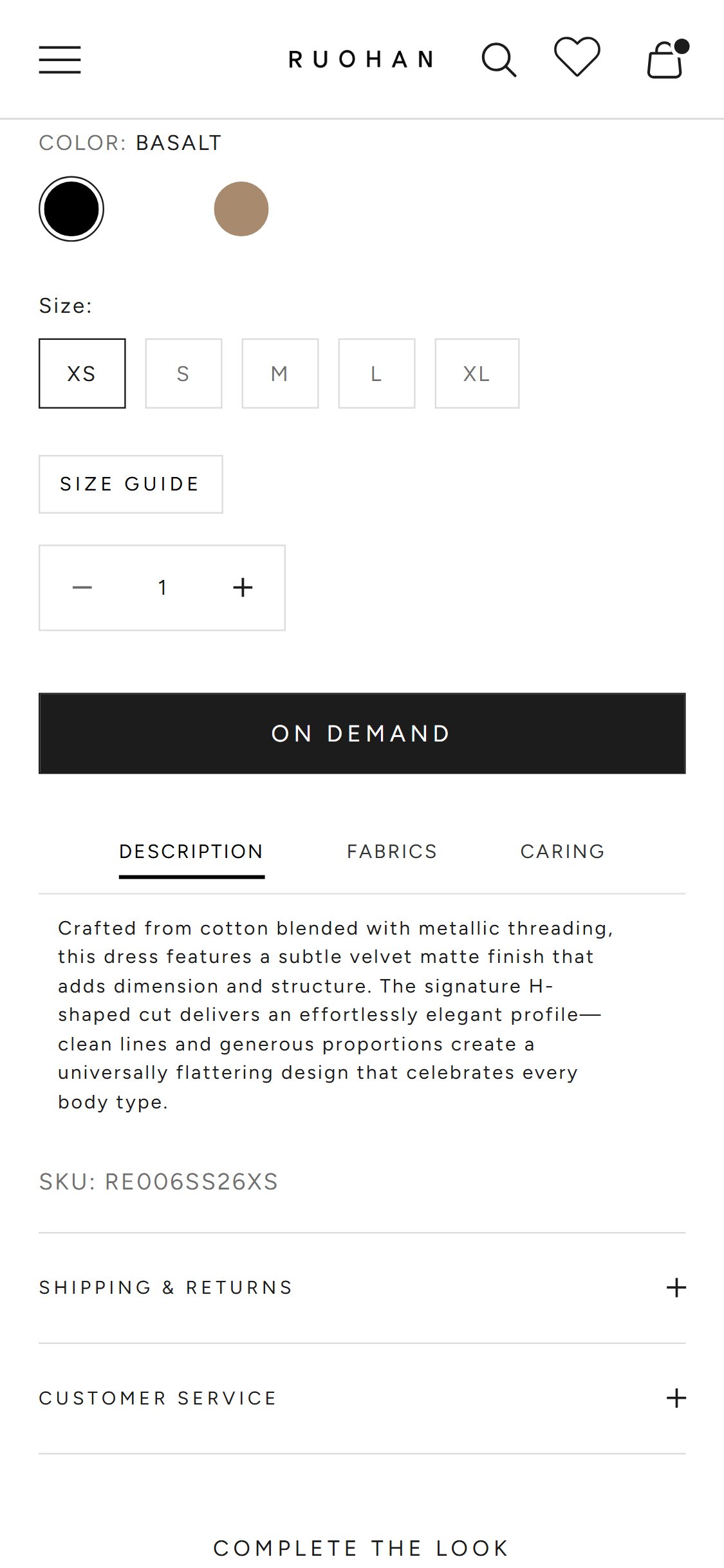
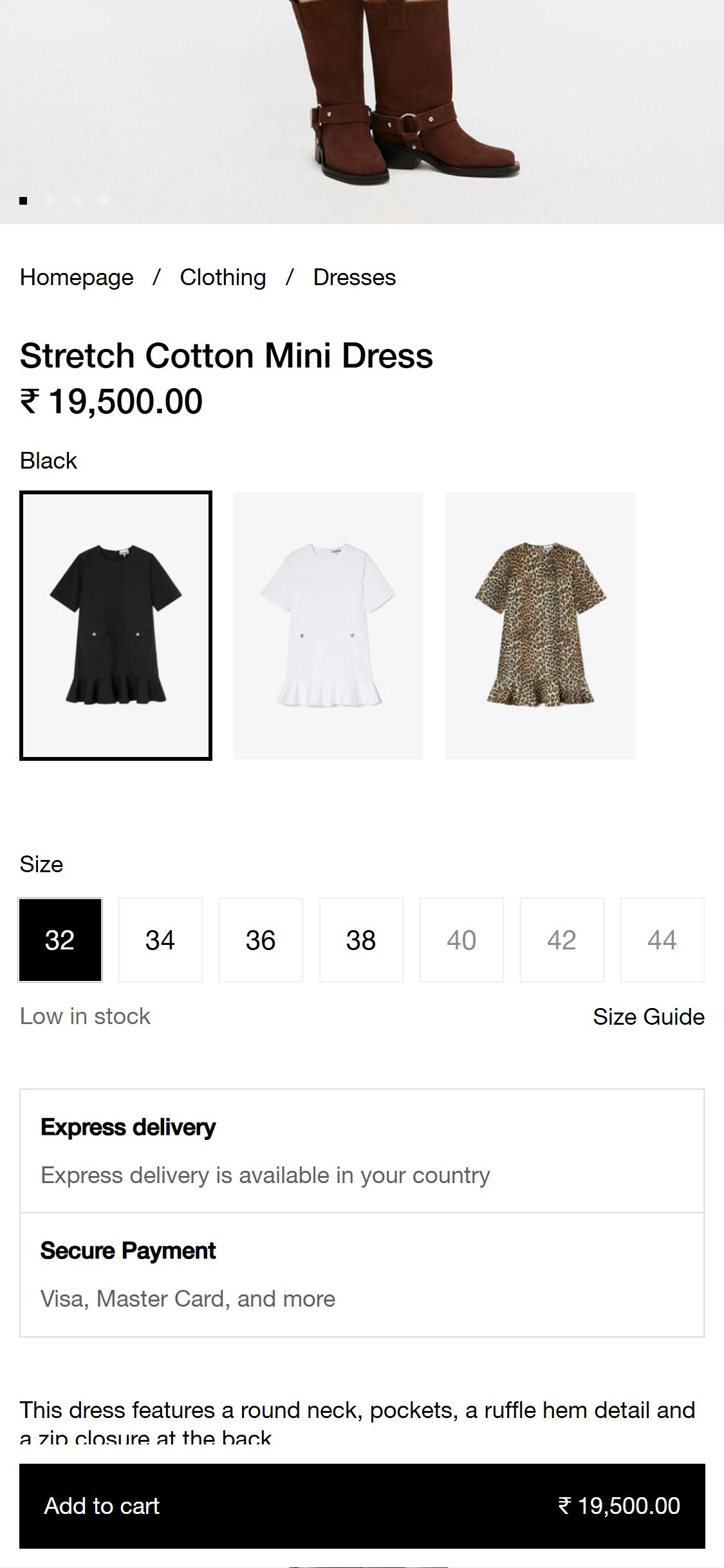
- The ATC zone shows size pills, quantity selector, and the 'ON DEMAND' button — zero trust indicators (no return policy, no secure payment badge, no guarantee text)
- SHIPPING & RETURNS info exists but is collapsed in an accordion below the description tabs, requiring an extra tap to discover
- For a global brand selling $420–$1,430 items to first-time international buyers, the absence of inline trust signals is a significant conversion barrier
- 5/10 benchmark fashion stores display at least one trust badge within the ATC zone
- Add 2–3 inline trust icons directly below the ATC button: return icon ('Easy Returns'), lock icon ('Secure Checkout'), shipping icon ('Worldwide Shipping')
- Surface the key return policy detail inline ('14-day returns') rather than hiding it in a collapsed accordion — this single change removes a major hesitation point
- Keep the iconographic style minimal (line icons) to match the brand's clean aesthetic
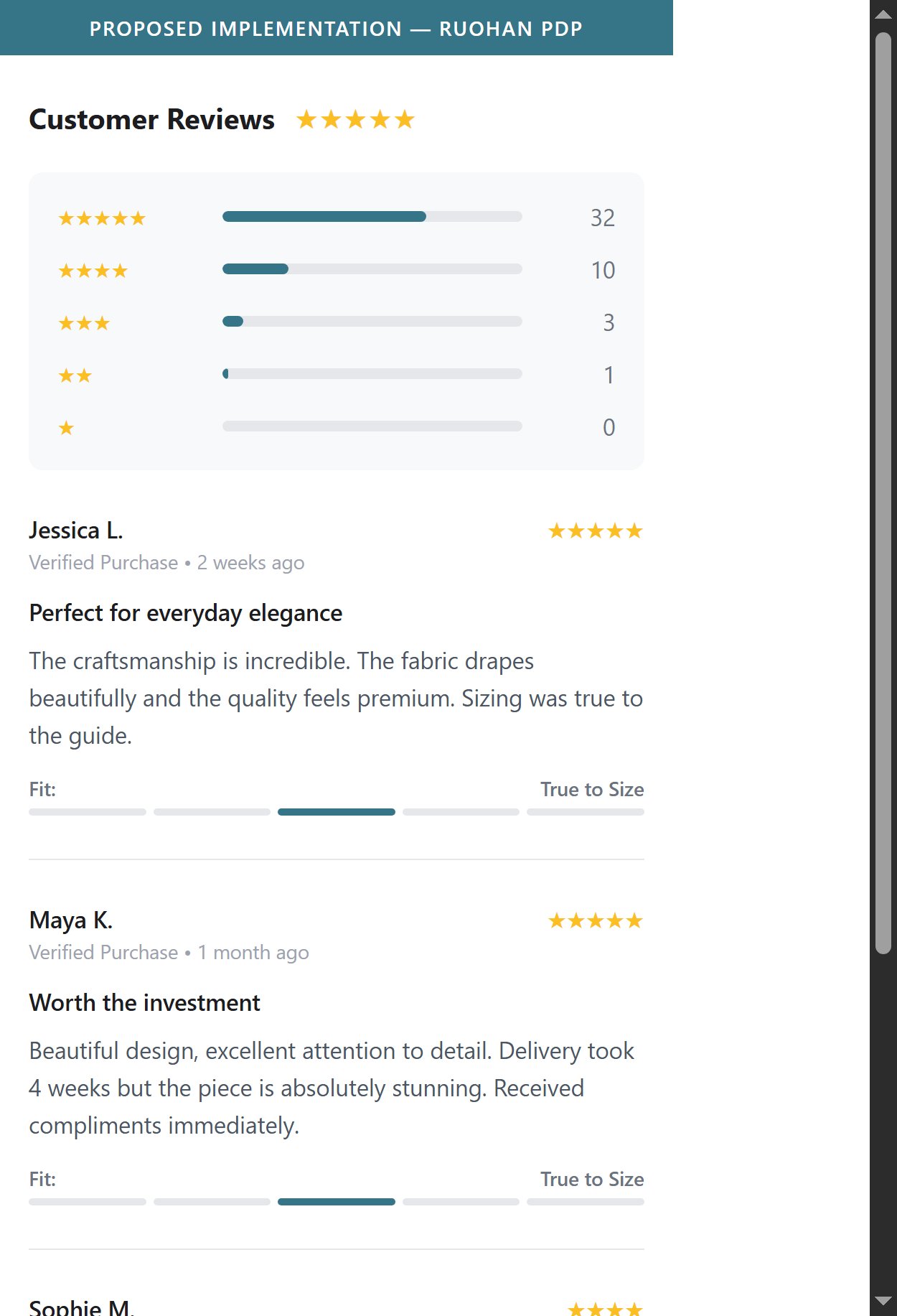
- The Ruohan PDP has no reviews section at all — not even a placeholder. The page ends with a Contact form and breadcrumbs before the footer
- No review app scripts (Judge.me, Loox, Yotpo, Stamped, Okendo) were detected in the page source — reviews are not installed
- At a median price point of ~$600, international customers rely heavily on social proof before purchasing — zero reviews is a high-friction state
- Fashion benchmark: stores with reviews see 20–40% higher PDP-to-cart conversion vs. stores without
- Install Judge.me (free tier available) or Okendo as a priority — both integrate natively with Shopify and support photo/video reviews
- Enable post-purchase review request emails to build inventory quickly — target 10+ reviews per hero product within 60 days
- Display a 'Be the first to review' CTA section as a placeholder while reviews are being collected
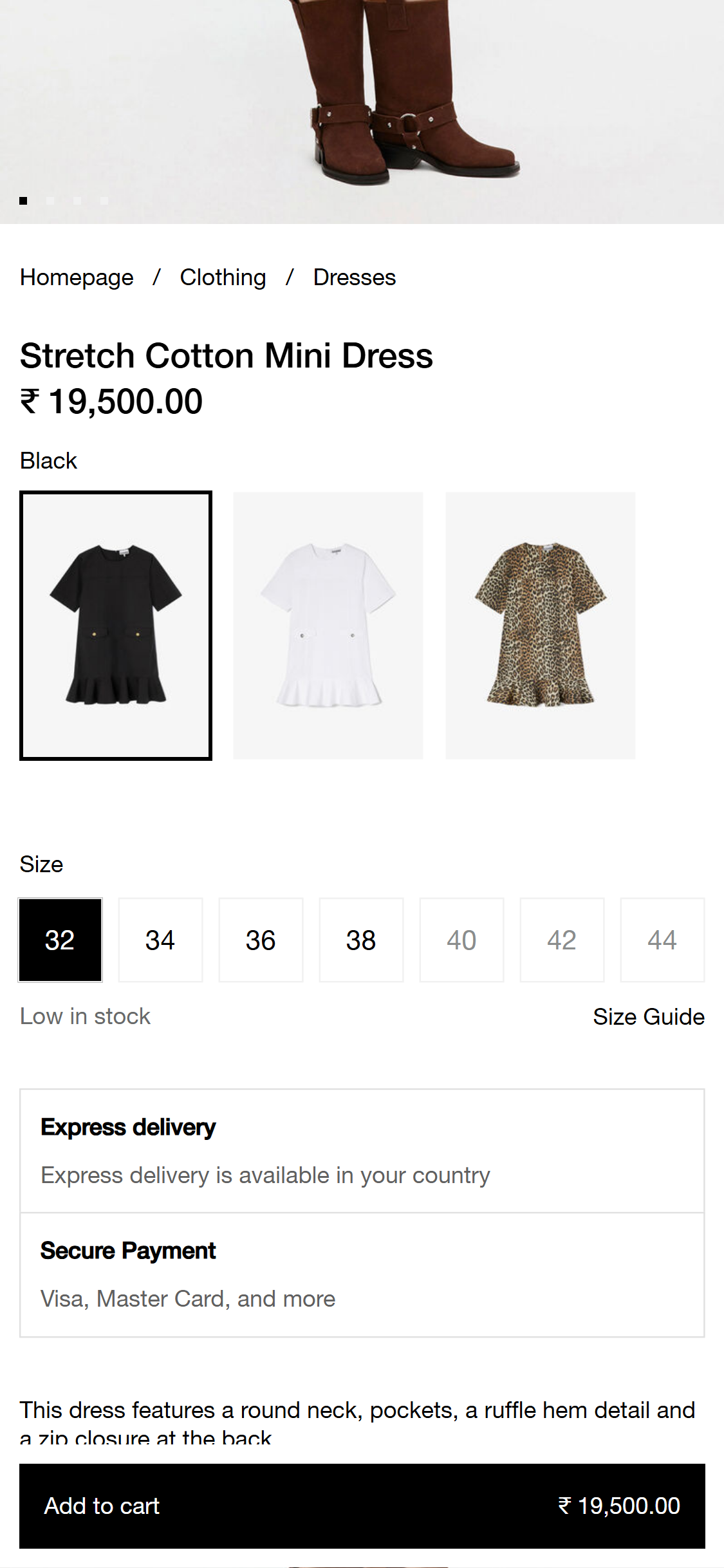
- No delivery estimate or shipping timeframe is displayed on the PDP — shoppers must proceed all the way to checkout to learn when items will arrive
- Many Ruohan products are 'ON DEMAND' (made-to-order) implying a longer lead time — this makes delivery information even more critical to surface early
- International shoppers (Ruohan sells globally to 195+ countries) are especially concerned about delivery windows and customs timelines
- Absence of delivery info is a top-3 reason for cart abandonment in global fashion commerce
- Add a static delivery estimate line below the ATC button: 'Standard delivery: 5–10 business days | ON DEMAND items: 3–4 weeks' — sets clear expectations
- For ON DEMAND products specifically, surface the lead time prominently (not just in fine print) so shoppers self-select before adding to cart
- Consider a simple country selector that shows region-specific shipping estimates for key markets
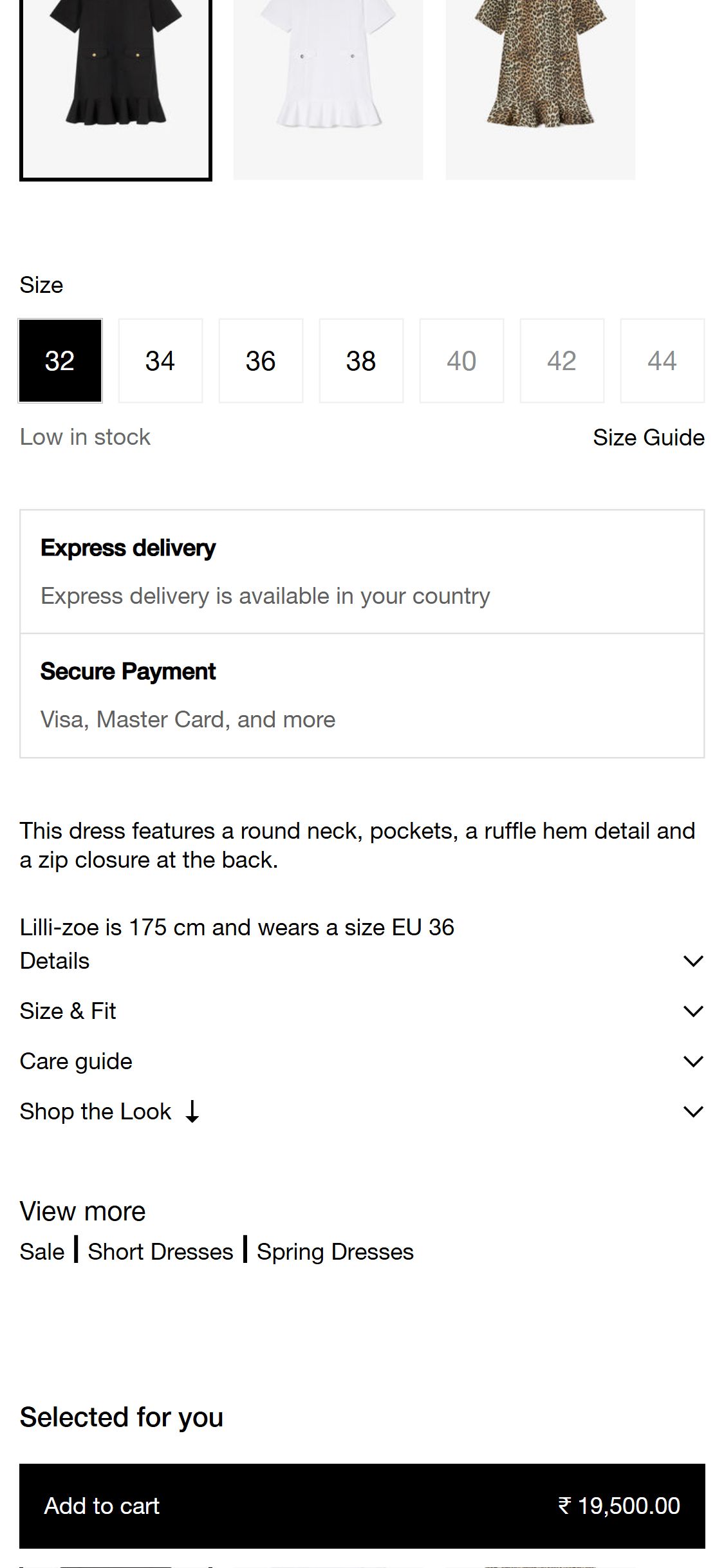
- PDP includes model/lifestyle shots (images 2–6 in the gallery) but no model height, weight, or size worn is stated anywhere on the page or in captions
- The size guide provides measurement tables but no reference point for how the garment looks on a specific body
- 5/10 benchmark stores display 'Model is 175cm wearing size S' adjacent to product images — this single line reduces size-related returns significantly
- Without size reference, shoppers must guess from visual proportions alone — a key friction point for global buyers unfamiliar with Ruohan's sizing
- Add a 'Model details' line below the image gallery: 'Model is [height], wearing size [X]' — this takes 5 minutes to implement per product
- For the size guide popup, include a photo of the model wearing the specific product at the stated measurements
- Given Ruohan offers both Asian and European sizing, model measurements in both systems would be especially helpful
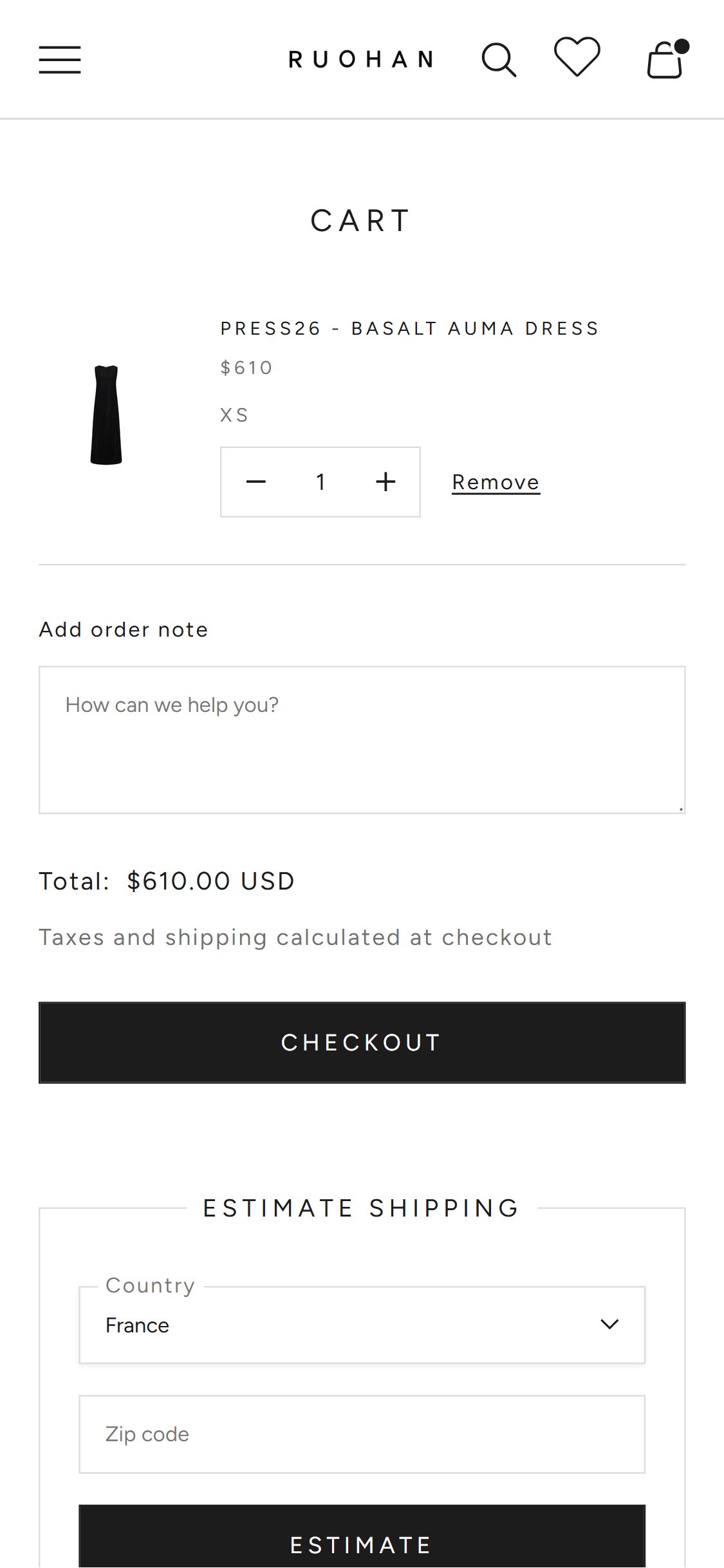
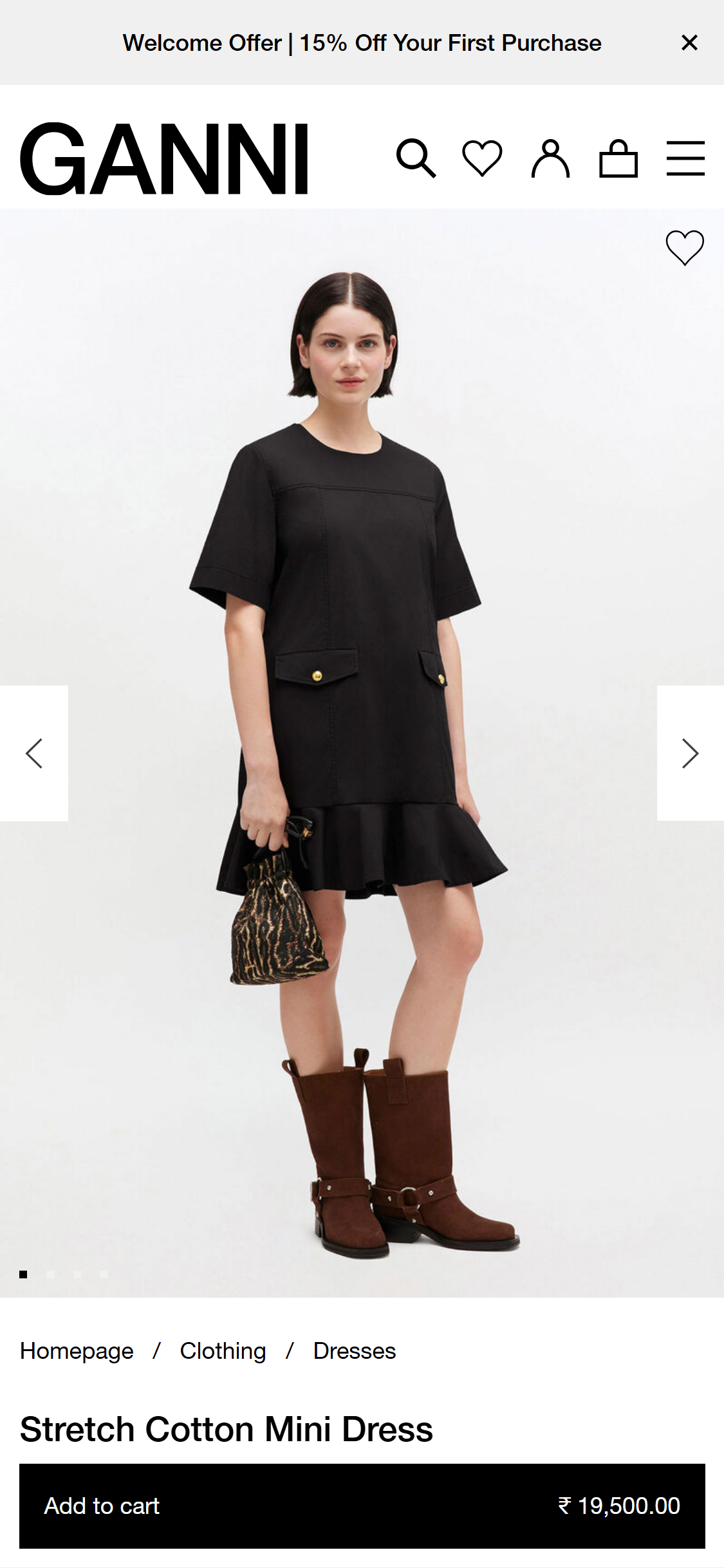
- The cart (drawer and /cart page) shows only the added item, a note field, order total, and a single CHECKOUT button — no product recommendations at all
- The PDP has a 'Complete the Look' section that correctly surfaces complementary items — but this is not replicated in the cart where purchase intent is highest
- At $600+ average order value, adding even one complementary accessory or coordinating piece could increase AOV by $200–400
- 7/10 benchmark fashion stores surface cross-sell recommendations in the cart; this is one of the highest-ROI optimizations available
- Add a 'Complete the Look' or 'You May Also Like' section to the cart drawer showing 2–3 curated products that complement the item in cart
- Use Shopify's native product recommendations or install Rebuy/Frequently Bought Together to automate personalized suggestions
- Place the recommendation section between the item list and the order summary — not after the checkout button
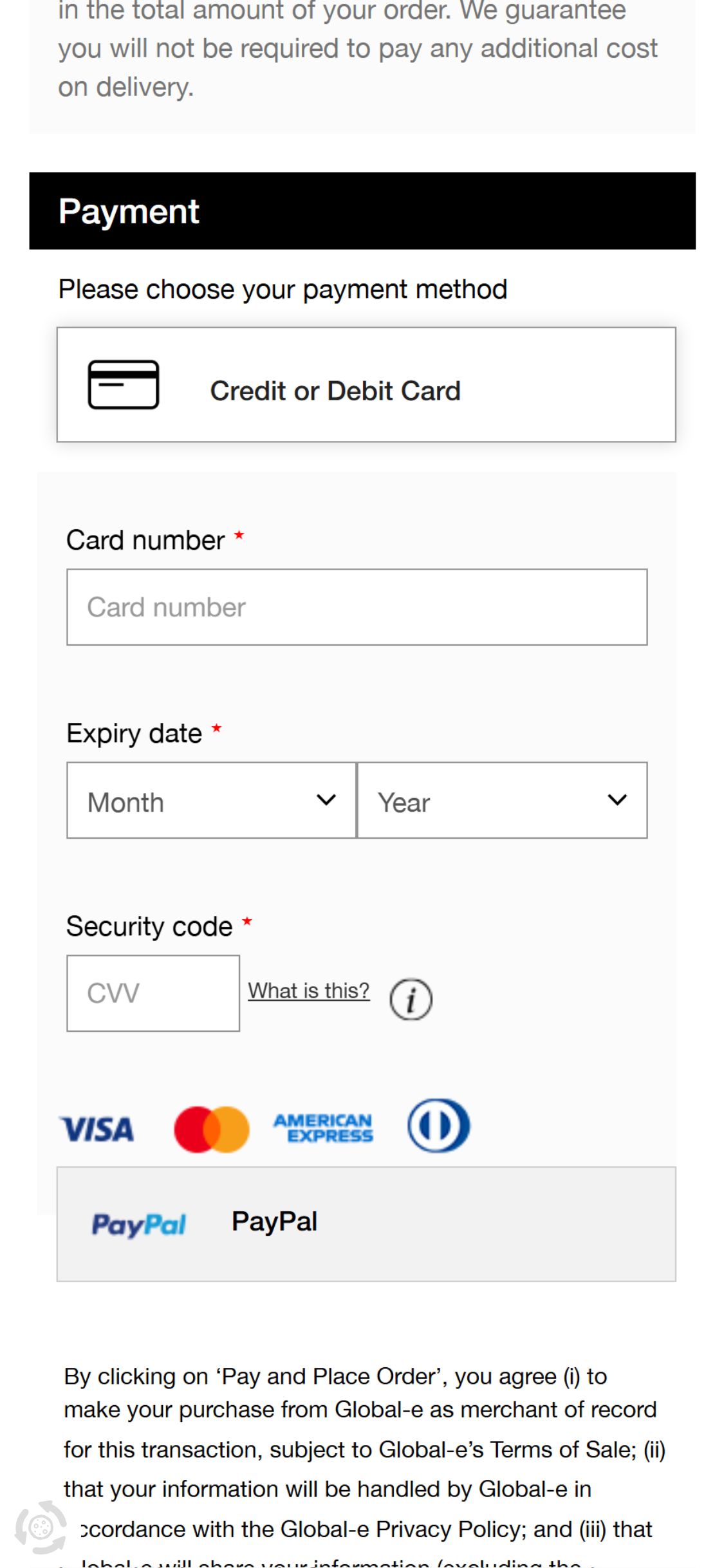
- The CHECKOUT button sits alone with only 'Taxes and shipping calculated at checkout' as supporting text — no payment method icons, no security badge, no guarantee
- No payment method logos (Visa, Mastercard, PayPal, etc.) are displayed anywhere in the cart or footer — buyers cannot confirm their payment method is accepted
- No express checkout options (Shop Pay, Apple Pay, Google Pay) are offered — only the standard CHECKOUT button despite Shop Pay being available in the Shopify admin
- For a global brand with international buyers, payment method transparency at checkout is especially important
- Add a row of accepted payment method icons (Visa, Mastercard, PayPal, Amex, Apple Pay) directly below the CHECKOUT button
- Add a 'Secure Checkout' line with a lock icon to reinforce safety — 10-minute implementation with measurable checkout conversion impact
- Enable Shop Pay as an express checkout option — it pre-fills shipping and payment for returning Shopify customers and reduces checkout friction
Performance & Technology
Core Web Vitals, page-speed signals, and the technology stack powering Ruohan
Core Web Vitals
Technology Stack
Performance & Technology Assessment
Mobile performance is needs work (35/100); desktop is needs work (39/100) on Shopify. Page-speed and Core Web Vitals are increasingly load-bearing for SEO and conversion in this category — addressing the weakest vital first is the single highest-leverage technical improvement available.
Confidential — Prepared for Ruohan by Growisto | May 2026
App Ecosystem
What's installed vs what's missing from best-in-class Fashion stores
Present (7)
Missing (8)
App Stack Assessment
7 apps detected, 8 critical gaps identified
Confidential — Prepared for Ruohan by Growisto | May 2026